




Weird D&D Monster Lore Deep Dive – Allip
Allips Are What Happens When Knowledge Wins

Undead in Dungeons & Dragons are usually easy to understand. A ghost lingers because of unfinished business. A vampire clings to immortality through hunger and ambition. A lich sacrifices everything in pursuit of eternal power.
An allip is different.
An allip isn’t driven by revenge, greed, hatred, or even fear. Instead, an allip exists because someone learned something they were never meant to know.
That idea alone makes them one of the most unsettling undead creatures in the entire game.
The lore surrounding allips has evolved over the years, but one thread remains remarkably consistent. Somewhere, at some point, a mortal mind encountered a truth so vast, terrible, or incomprehensible that it shattered the person’s sanity. The revelation destroyed them, but the knowledge itself remained. What rises afterward isn’t quite a ghost and isn’t quite a person. It’s the lingering echo of a revelation that no mortal mind was capable of surviving.
That’s a fascinating concept because it turns one of the fundamental assumptions of fantasy adventure upside down.
Most campaigns reward curiosity. Players investigate mysteries, uncover lost histories, and search for hidden truths. The more knowledge a character acquires, the more successful they tend to become. Allips challenge that assumption by asking a simple question.
What if the answer is worse than the mystery?
The official lore deliberately avoids defining exactly what sort of truth creates an allip. That’s part of what makes them so effective. Maybe the victim discovered the true nature of the soul. Maybe they learned something about the gods that mortals were never meant to understand. Perhaps they uncovered evidence that reality itself is broken, or that the universe is moving toward an inevitable end.
The details almost don’t matter.
What matters is that the knowledge wasn’t merely frightening. It was fundamentally incompatible with the victim’s ability to understand the world.
That distinction is important. An allip isn’t created by seeing something scary. It’s created by understanding something devastating.
As Dungeon Masters, that’s where the real storytelling potential begins.
One of the easiest mistakes to make with an allip is treating it like just another monster encounter. If the creature appears in a room and immediately rolls initiative, you’ve lost most of what makes it memorable. The horror of an allip should begin long before the party ever sees one.
Imagine a library where entire sections have been sealed behind stone walls. Scholars refuse to discuss a particular subject. Journals abruptly end in the middle of a sentence. A respected sage becomes increasingly paranoid before disappearing entirely. Everywhere the characters look, they find evidence that somebody discovered something important and desperately wished they hadn’t.
By the time the allip finally appears, the players should already be wondering whether they truly want the answers they’ve been seeking.
This works particularly well when the mystery ties directly into your campaign. Perhaps the allip knows the origin of a powerful artifact. Maybe it understands the true nature of a god worshiped throughout the setting. It could even possess information connected to a player character’s backstory.
Suddenly the creature isn’t guarding treasure. It’s guarding understanding.

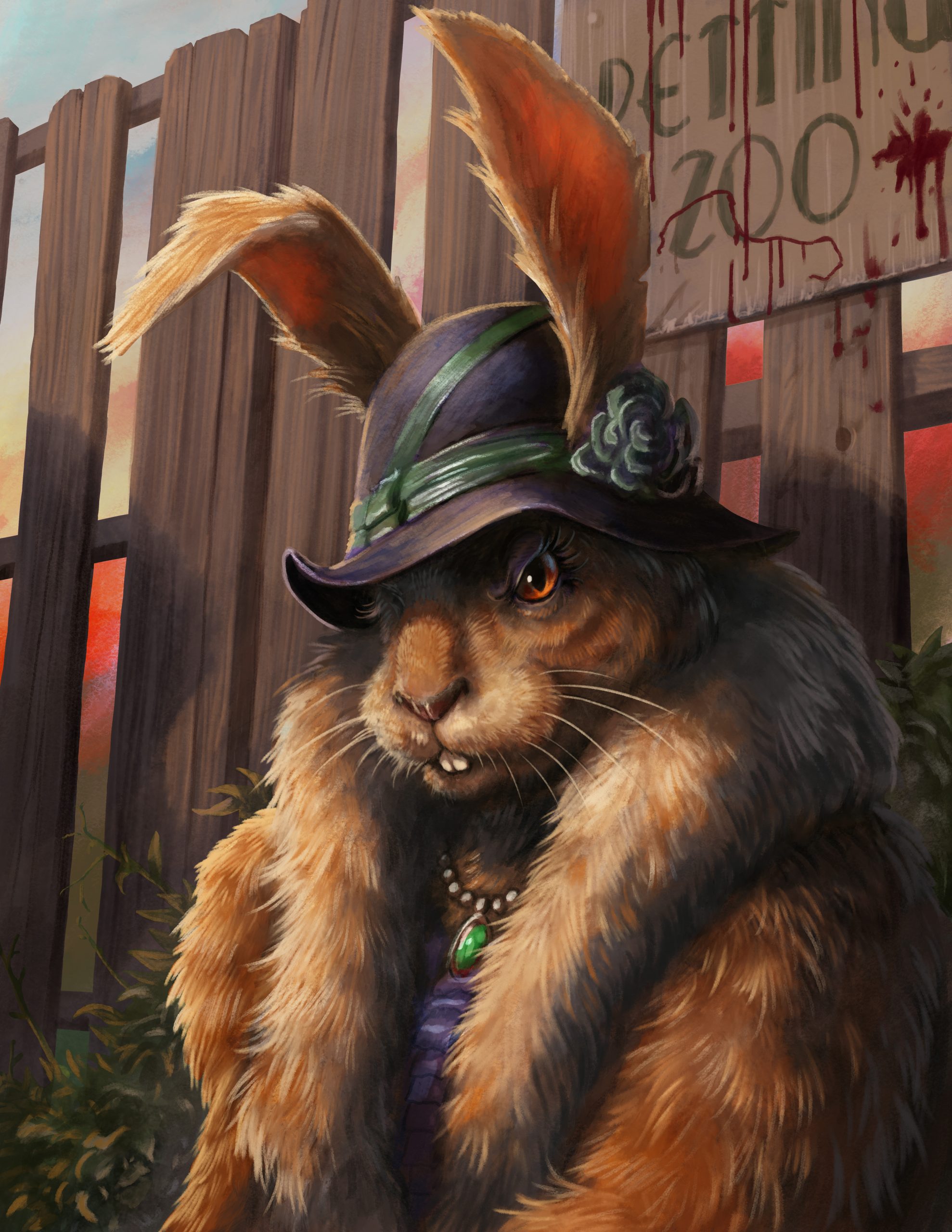
Not exactly the owlbat Steven imagined but nevertheless a cool image! What’s your owlbat homebrew D&D monster look like? [Art by Greg Capullo]
One of the most disturbing elements of older allip lore is the implication that their condition spreads through ideas rather than physical attacks. Their whispers erode sanity because they carry fragments of the same revelation that destroyed the original victim. The danger isn’t the creature itself. The danger is what the creature knows.
That transforms an allip from a traditional undead monster into something closer to a living memetic hazard. Characters don’t fear being bitten or clawed. They fear hearing one sentence too many.
The resulting encounters can feel very different from standard combat. Silence becomes valuable. Information becomes dangerous. Players who normally chase every clue suddenly find themselves debating whether some mysteries should remain unsolved.
Those moments create fantastic roleplaying opportunities.
Characters may choose to destroy forbidden texts rather than preserve them. They might argue over whether the truth should be revealed to the world. Some may become obsessed with learning more despite the danger, while others conclude that ignorance is the wiser path.
Those are compelling character decisions because there isn’t necessarily a right answer.
Even defeating an allip doesn’t provide a neat resolution. Destroying the creature doesn’t erase the truth that created it. The dangerous knowledge still exists somewhere. The question becomes what the characters will do with it.
Will they bury it?
Will they share it?
Will they risk becoming the next victims?
That’s what makes allips so effective as horror monsters. They don’t threaten the body nearly as much as they threaten certainty. They force players to confront questions that fantasy heroes rarely have to ask. Is every truth worth knowing? Do mortals deserve every answer? Can understanding itself be dangerous?
Most undead are reminders of death.
Allips are reminders that some discoveries can be worse.
The victim didn’t die because they encountered a monster.
They died because the universe explained itself.
And once they understood, they couldn’t survive the answer.
Until next time, stay nerdy.

No Comments